✧ Key Takeaways
- The single biggest factor in how long your tint and PPF last is the condition of the paint and glass underneath, not just the film brand.
- A pre-installation inspection catches respray, chips, swirls, and seal issues that would otherwise get sealed in and shorten film life.
- 3M PPF carries up to a 5-year warranty on Series 150 and up to 3 years on Series 100 and Series 50, while 3M window tint comes with a 5-year E-Warranty when fitted by a 3M Authorized Dealer.
- Resprayed panels need around 30 to 60 days to outgas before film goes on, or trapped solvents can cause lifting.
- Wait 72 hours before the first wash, hand wash gently, and do a quick monthly look-over to catch lifting edges early.
A simple car inspection checklist in Malaysia is the quietest step that decides how long your window tint and paint protection film actually last. Most owners obsess over the film brand and the package price. The bigger factor sits underneath, on the paint and glass the film has to bond to. This guide gives you a practical inspection routine for before installation and during ownership, so your tint and PPF reach their full warranty in our hot and humid climate.
How Inspection Affects Tint and PPF Lifespan
The lifespan of tint and PPF depends heavily on the surface beneath them. A pre-installation inspection catches paint and glass problems that would otherwise shorten film life, while regular checks afterwards spot lifting and wear early. Together these two habits help your film last its warranted years instead of failing in the first season.
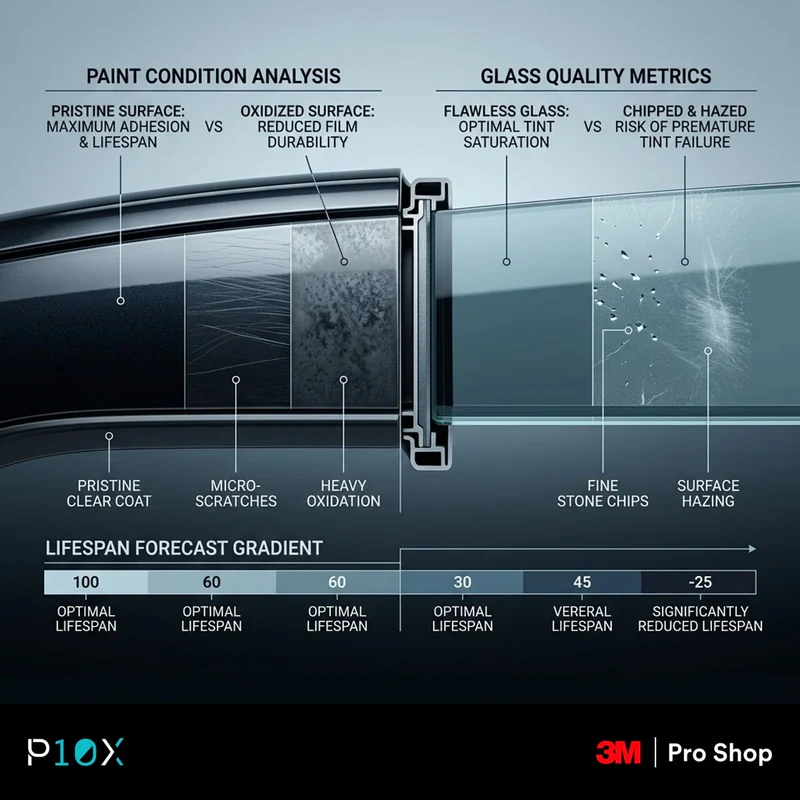
Film is only as stable as the layer it grips. When PPF goes over flaking clear coat or a weak respray, the adhesive pulls at a surface that is already failing, and edges start to lift within months. When tint goes onto glass with old adhesive residue or fine scratches, you get haze and bubbles that no amount of squeegee work will fix later. None of this is a film defect. It is a surface problem that a professional pre-installation car inspection in Malaysia would have flagged before any film was cut.
Your Pre-Installation Inspection Checklist Before Film
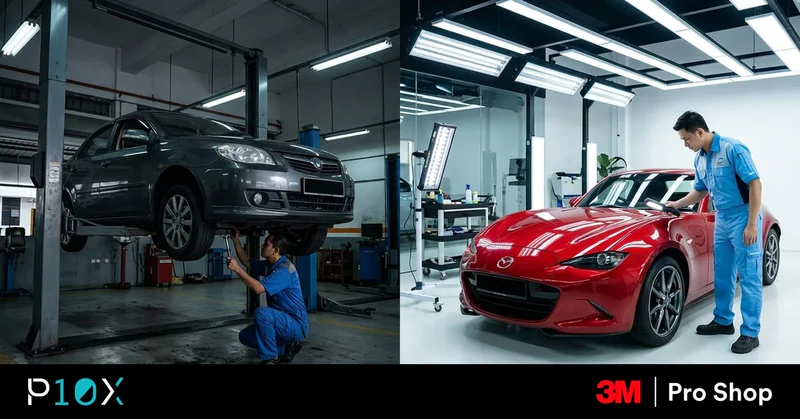
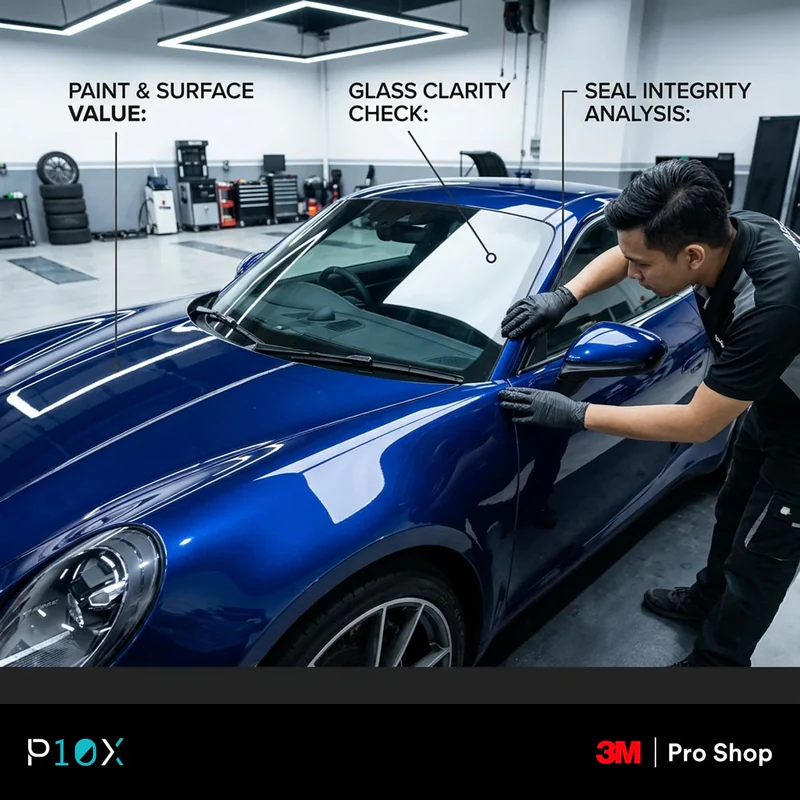
This is the part most shops rush and most owners never see. A proper pre-installation check works through the paint, then the surface defects, then the glass and seals, before a single panel is wrapped. Run through the three groups below, or ask to watch what happens during a 3M Pro Shop car inspection service so you know the standard to expect.
Paint depth and respray check
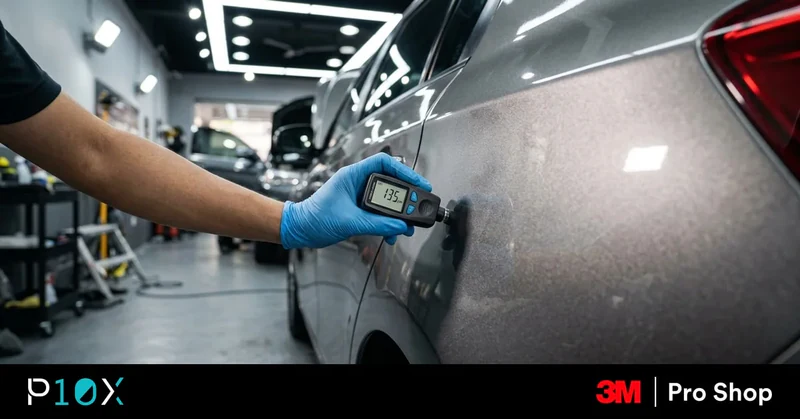
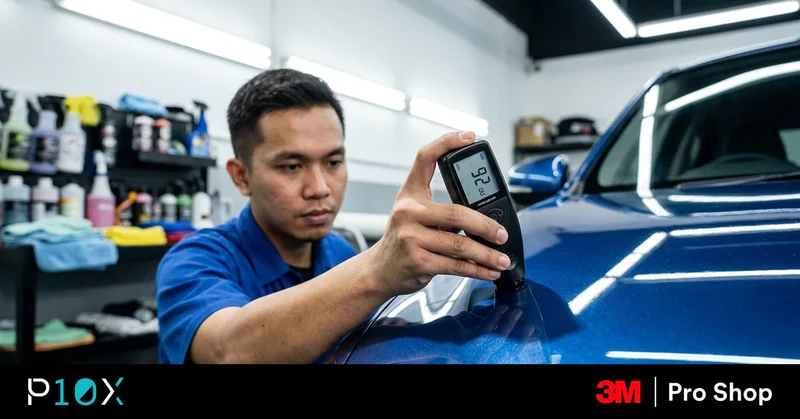
Start with paint thickness. A technician runs a paint-depth gauge across each panel to map original factory paint against any repainted areas. Resprayed panels read much thicker and signal hidden bodywork. This matters because checking the paint before PPF decides whether the film will hold. Fresh respray still releases solvent for around 30 to 60 days, so PPF laid too early can bubble as the paint outgasses. If you are applying PPF over a respray, the safe move is to confirm the paint has fully cured first, otherwise you risk pulling the new paint off when the film is one day removed.
Chips, swirls, and contamination
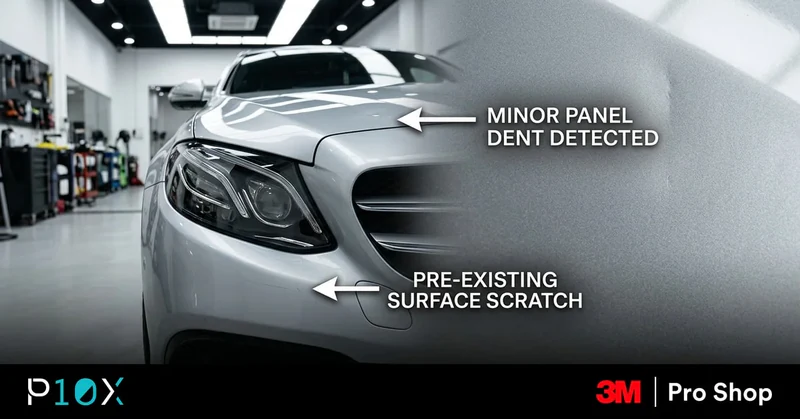
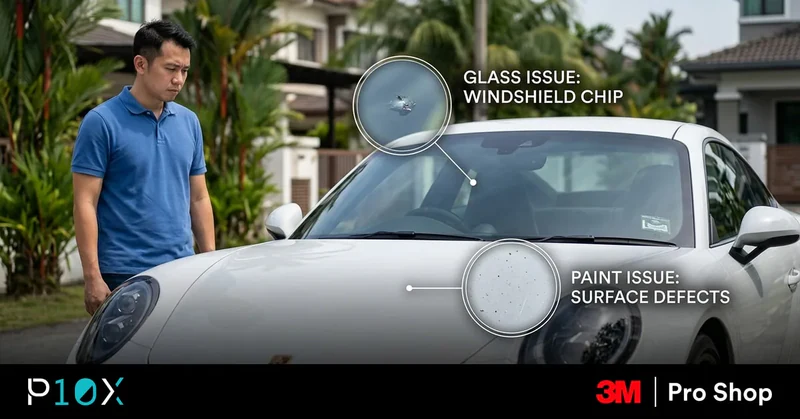
Next, inspect the surface in good light for stone chips, swirl marks, embedded tar, and bonded contaminants. PPF is clear, so anything sealed under it stays visible for years. Worse, a deep chip left under film can let moisture creep in and spread corrosion. A correct prep includes a wash, decontamination, and light correction of swirls before any film touches the paint. On the glass side, old tint adhesive and hard water spots have to come off completely, or new tint will not bond evenly.
Glass, windscreen, and seals
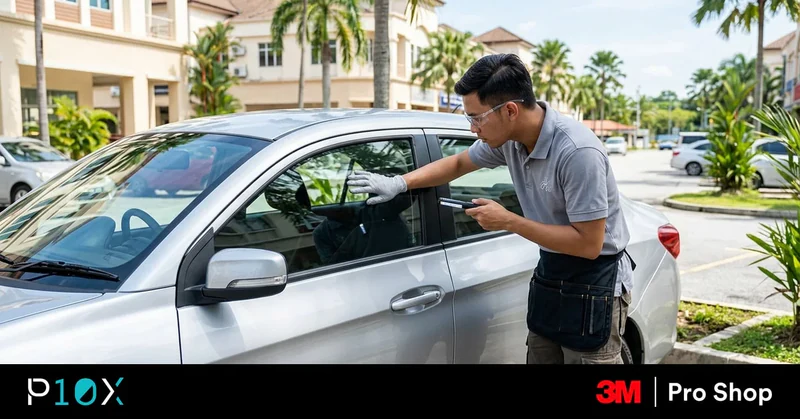
Finally, check the glass, windscreen, and rubber seals. Cracked or worn seals trap water during tinting and feed slow bubbling at the film edge. Chipped windscreen glass can spread once heat cycles begin. Worn door trim makes it hard to tuck tint cleanly into the channel, which is where peeling usually starts. A shop that removes door panels and protects switches before tinting is protecting both your electronics and the lifespan of the film.
Why Surface Prep Decides How Long Film Lasts
Surface prep is the difference between film that fails early and film that runs its full warranty. 3M warranties protect against defects in the film, not damage caused by weak adhesion, poor prep, or unstable paint underneath. If a panel was badly prepped, a future lifting edge may not be a covered claim, which is exactly how owners lose protection they paid for.
Think of it in plain terms. A film sitting on clean, sound, fully cured paint can flex with heat, repel water, and self-heal minor marks. A film sitting on a dirty or unstable surface is fighting that surface every hot afternoon in a KL car park. Good prep is also how you keep your 3M PPF warranty valid, because the installer can document that the surface met standard before the film went on. This is one clear reason to use a 3M Authorized Dealer such as 3M Pro Shop by P10X, where prep is part of the process rather than an upsell.
Inspection Habits That Extend Tint and PPF Life
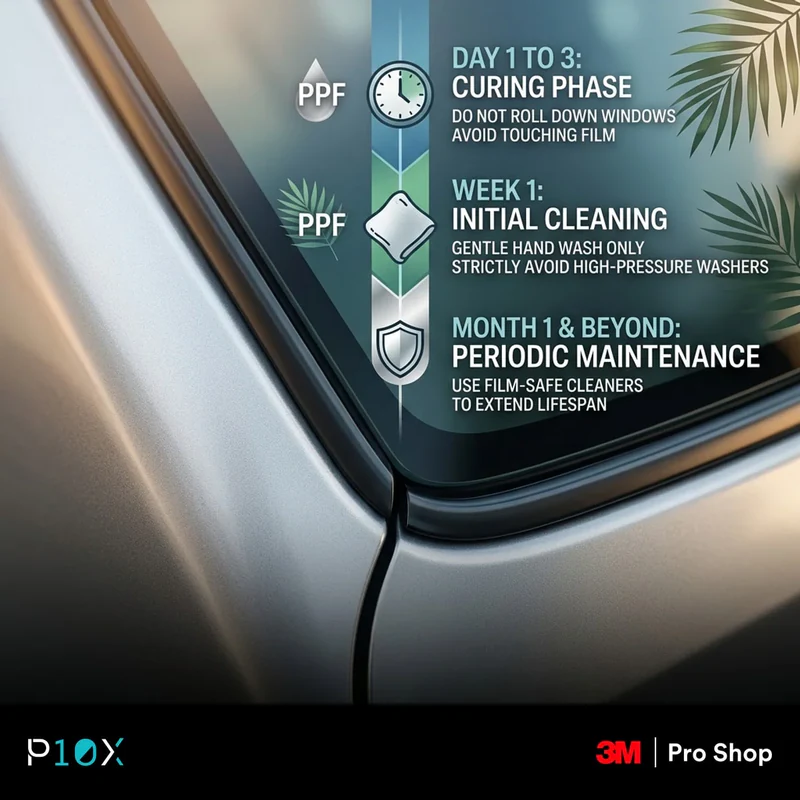
Lifespan does not stop at handover. The first 72 hours and the first few months set the tone. Wait 72 hours before the first wash so the adhesive can cure. After that, hand washing is preferred over automatic brush washes, which can scuff film and lift edges. Wipe off fuel spills, bird droppings, and tree sap quickly, and soften stubborn contaminants like sap with warm soapy water rather than scraping.
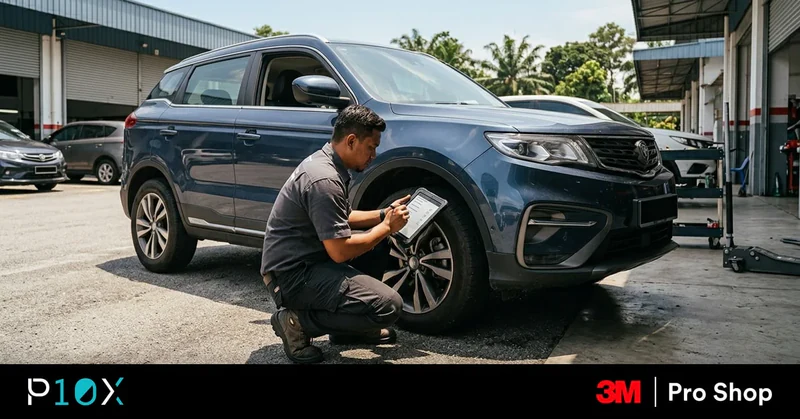
Build a simple monthly habit. Run your eyes and a clean hand along film edges on the bonnet, bumper, mirrors, and door cups, feeling for any edge starting to lift. Check tint edges at the top of each window for peeling or haze. Park in shade or indoors when you can, since constant direct sun ages everything faster. If you spot anything early, it is worth booking time to schedule a professional PPF check-up before a small lift becomes a full re-wrap.
Warning Signs Your Tint or PPF Needs Attention
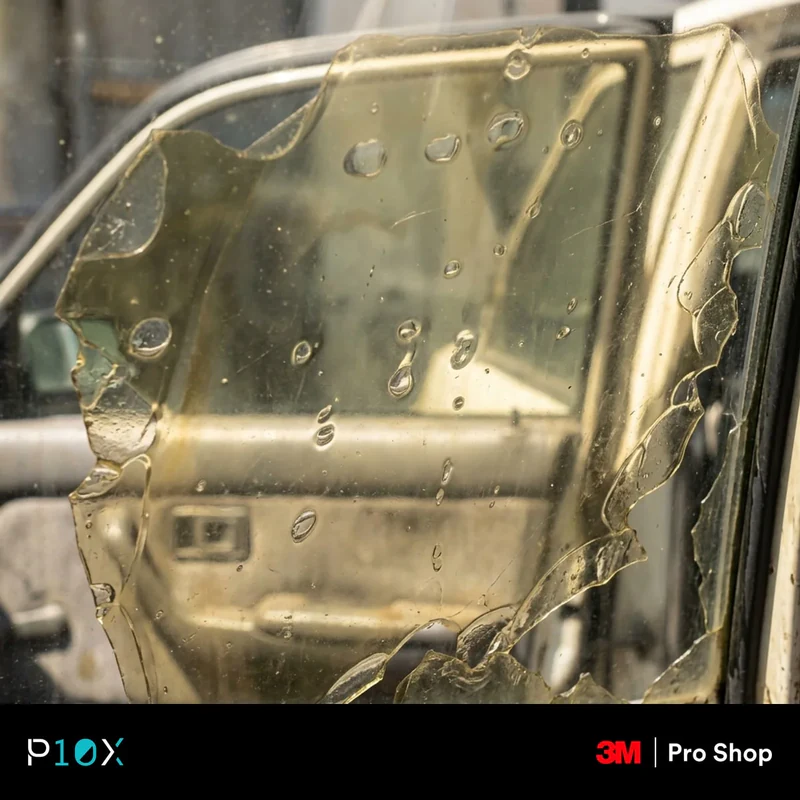
Film rarely fails overnight. It tells you first. On PPF, watch for lifting or curling edges, cloudiness that does not clear, yellowing on older or lower-grade film, and trapped dirt or moisture along a seam. On tint, watch for bubbling, a purple shift on cheap dyed film, peeling at the top edge, and a hazy view at night. Quality 3M films resist most of these, which is why a yellowing or purpling film is often a sign of a non-3M product rather than fair wear.
Acting early is cheaper than waiting. A single lifting edge re-secured in time can save a whole panel. A small bubble caught now avoids a full re-tint later. The 3M self-healing top coat on Series 150 and Series 100 clears light swirls with heat, but it cannot fix a lifting edge or contamination from poor prep, so visual checks still matter.
How Long Should Tint and PPF Last in Malaysia
With sound prep and basic care, 3M film should run its full warranty term. The figures below are the 3M ground-truth warranty terms to plan around, rather than the vague five to ten year claims you see on generic guides.
| 3M PPF series | Film thickness | Warranty term |
| Series 150 Gloss | About 8 mil | Up to 5 years |
| Series 100 Gloss | About 7.5 mil | Up to 3 years |
| Series 50 Gloss | 185 micron | Up to 3 years |
For window film, 3M tint packages installed by a 3M Authorized Dealer carry a 5-year E-Warranty across the range, from the entry XP Series up to the current Crystalline Black flagship. The warranty is your floor, not your ceiling. Well-prepped film on a garaged car often outlives its warranty comfortably, while badly prepped film on a car that bakes outside daily can fail before the term is up. That gap is decided at inspection, not at purchase.
Make Inspection Your First Layer of Protection
The decision logic is simple. Pick the film that suits your budget, then spend equal energy making sure the surface under it is clean, sound, and fully cured before installation, and give it a quick monthly look afterwards. That is what turns a warranty number into real years on the road. If you are about to invest in tint or PPF, book the inspection first and treat any flagged issue as a saving, not a delay. A 3M Authorized Dealer such as 3M Pro Shop by P10X can walk you through the pre-installation inspection and the nearest outlet before you commit.
Find out the best protection for your car
Visit a 3M Pro Shop and discover the cost-effective 3M Protective Film and Window Tint
Frequently Asked Questions
How long does PPF last in Malaysia?
With proper prep and care, 3M PPF runs its warranty term: up to 5 years on Series 150 and up to 3 years on Series 100 and Series 50. Garaged, well-maintained film often lasts beyond that, while poorly prepped film in constant sun can fail sooner.
Does a pre-installation inspection really make tint and PPF last longer?
Yes. The film bonds to your paint and glass, so any respray, chip, contamination, or worn seal underneath becomes a future failure point. Catching these before installation is the most reliable way to reach the full warranty.
How often should I inspect my PPF?
A quick monthly look along the edges of the bonnet, bumper, mirrors, and door cups is enough for most owners. Add a professional check-up once a year, or sooner if you notice any lifting, cloudiness, or trapped dirt.
Can poor paint condition shorten PPF life?
Yes. Film laid over flaking clear coat or an uncured respray pulls at an unstable surface and lifts early. Fresh paint needs roughly 30 to 60 days to outgas before PPF, and weak adhesion from poor prep is generally not a covered warranty claim.
What are the signs my PPF is failing?
Look for lifting or curling edges, cloudiness that will not clear, yellowing, and trapped dirt or moisture along a seam. Early action on a single lifting edge can save the whole panel from a re-wrap.
Does washing my car too early damage new PPF?
Yes. Wash too soon and you can disturb adhesive that is still curing. Wait 72 hours before the first wash, then hand wash gently and avoid stiff automatic brushes that can scuff film or lift edges.