✧ Key Takeaways
- Ask how long your particular film needs to dry, rather than assuming every bubble is a defect.
- Have trapped debris, peeling corners, new scratches or a blurred driving view checked by the installer.
- Keep newly tinted windows closed and do not clean them for at least 48 hours. Follow a longer instruction if your installer gives one.
- Keep your invoice and E-Warranty record. An installation problem and a covered product defect may need different remedies.
- Photograph concerns when you notice them. You don't need to wait for the tint to finish drying before reporting possible damage.
Small bubbles after window tint installation don't automatically mean you've had a bad tint job. In Malaysia, as elsewhere, moisture left during installation can make fresh film look cloudy before it dries. Trapped dirt, a peeling corner or a new scratch needs a different response, especially if you cannot see clearly through the glass.
Even genuine 3M window tint needs to be fitted properly. If you've just collected your car, you can ask the shop to record anything that looks wrong and explain what should improve. You don't have to choose between accepting the whole job and demanding that every window be replaced immediately.
How to check freshly fitted tint
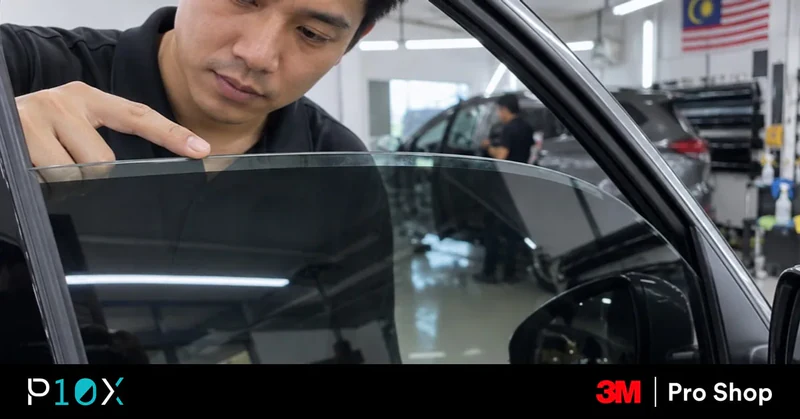
Check the glass in natural daylight, both from inside the car and from outside. Look through each window as well as at its surface. This helps separate a mark that distracts you during normal use from a tiny speck you can find only by putting your face against the glass.
The International Window Film Association's automotive inspection guideline recommends viewing the film squarely, with the outside inspection made from 3 feet away, roughly 90 cm. It judges whether blemishes are noticeable when looking through the glass, while allowing for temporary effects as moisture dries. It does not give a universal allowance of a particular number of dust specks.
From the driver's seat, check the windscreen and side windows for anything that makes the scene outside hard to see. From outside, compare matching windows for obvious differences in finish. You can also photograph the glass, surrounding rubber and door trim before leaving, without lowering a newly tinted window yourself.
A phone close-up is useful for showing a specific mark, but it does not show how distracting that mark is. Keep one wider photo alongside it. If a scratch or damaged seal is already visible at collection, ask the shop to record it then. Early documentation helps establish the sequence without pretending a photo alone proves who caused the damage.
Use the table below to decide what to discuss with the installer. It is a guide to the next step, not a diagnosis of the adhesive from appearance alone.
| What you notice | What it may mean | A sensible next step |
| Small moisture pockets or light cloudiness soon after fitting | Residual installation water may still be drying | Follow the stated drying period and compare photos for improvement |
| A speck or hair beneath the film | Material may be trapped under the film | Ask the installer to assess how noticeable it is in daylight |
| A corner curling away or a torn edge | Film damage or an edge that is not staying attached | Report it promptly and leave it untouched |
| A new line across the glass or film | A scratch needs inspection to identify the affected surface | Photograph it and ask the shop to check it |
| Blur or distortion that makes driving difficult | Visibility needs attention, even if the tint is fresh | Do not drive if you cannot see safely. Arrange an inspection |
Bubbles and haze while tint dries
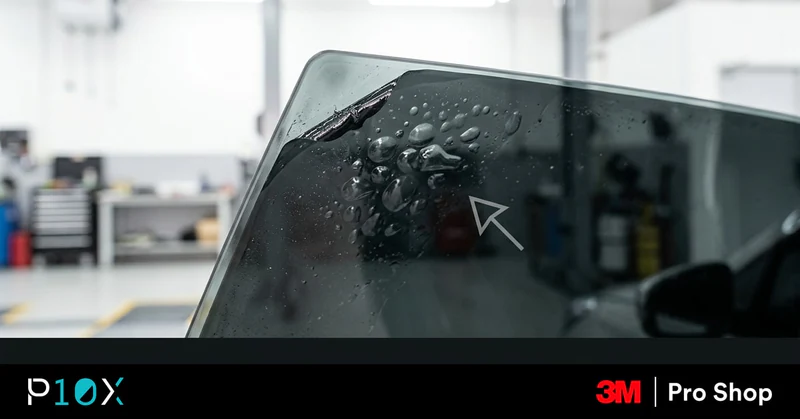
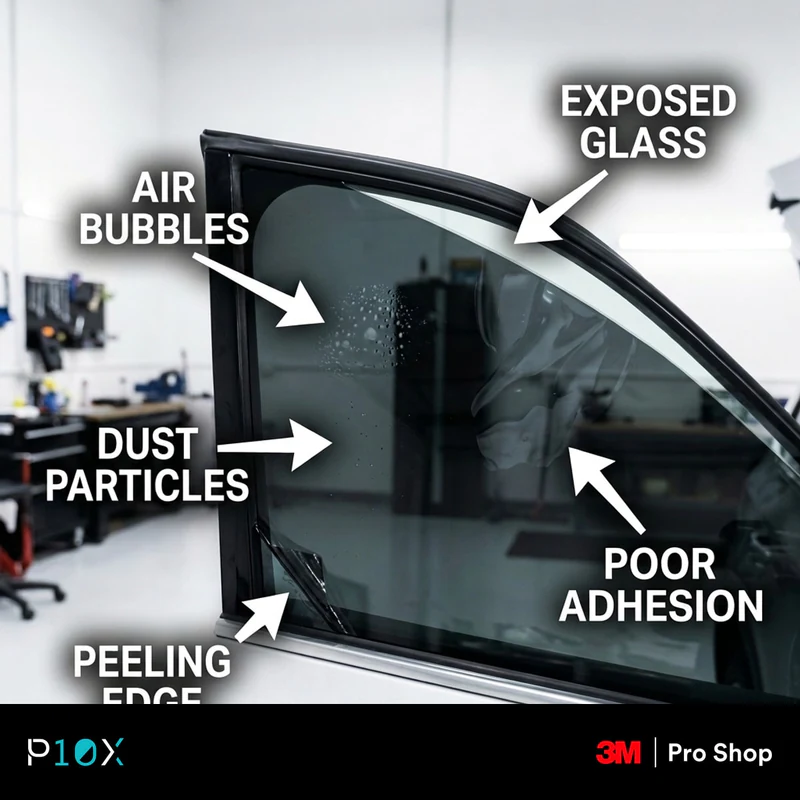
Small moisture pockets and light haze can occur after tinting, because the film is positioned using water before excess liquid is squeezed out. Some water remains between the film and glass. As it dries, the view can become clearer and the film's grip on the glass increases.
Drying time varies with the film, its coatings, the weather and where the car is kept. General industry guidance describes a few days to a couple of weeks, but some films need longer. Malaysian sunshine does not make a fixed deadline reliable for every installation, particularly when the car spends much of its time under cover.
A patch that changes as the window dries is different from a visible hair or piece of dirt trapped beneath the film. Colour alone cannot tell you which problem you have. A white-looking bubble is a reason to ask for an assessment, not proof that the adhesive has failed or that the whole installation needs replacing.
New bubbles on tint that has already been clear for some time also deserve inspection. They are not the same situation as moisture seen immediately after fitting. Our article on car tint bubbles covers causes in more detail, but the installer still needs to examine your actual window before identifying the fault.
Don't puncture bubbles, press them flat or try to heat the film yourself. Take photos and ask when the shop wants to reassess it. If the film is lifting or your driving view is affected, report that now rather than waiting for an agreed drying period to end.
Dust specks under the film
Small dust inclusions can happen even with careful installation, so a single tiny speck is not enough to judge the entire job. What matters is how noticeable the contamination is when you look through the window in daylight, rather than how dramatic it appears in a magnified phone photograph.
A cluster in the middle of your view, a long hair or obvious debris is worth showing the installer. Describe the window and where the material sits. That gives the shop something specific to inspect instead of a complaint that the tint simply looks bad.
Dust cannot evaporate in the way installation water does. If the shop asks you to wait, you can ask which part of what you're seeing is expected to clear. Moisture around a particle may change as the film dries, but waiting is not an explanation for the particle itself disappearing.
No general guideline can turn every contamination complaint into an automatic replacement. A fair assessment considers the actual finish, ordinary viewing conditions and what the shop agreed to supply. You can ask the installer to inspect the mark with you from inside the car, particularly if it sits where you normally look when driving.
Peeling edges and uneven cuts
A small clear gap along the top of a side window can be normal. Film pulling away from the glass is a separate issue. If a corner curls up, the edge tears or the film moves when the window is operated after the waiting period, the installer needs to check it.
IWFA guidance allows a maximum top edge gap of approximately 1 to 2 mm on windows that move in a frame. It also recognises a shaved finish that can appear to have no gap. This is not a target that every shop must leave, and a smaller gap is not automatically a better installation.
You can discuss the intended finish before booking, particularly if you notice a wide strip of bare glass or a cut that slopes across the window. Our window tint gap guide explains the difference between a normal gap and a finish worth checking. Glass and seal designs differ, so comparing your car with a different model may not settle the question.
Don't lower fresh windows just to inspect the top edge. Ask the installer to show you the finish at handover, then follow the waiting instructions. If peeling appears later, record when you first saw it and whether the window was being operated. That detail helps the shop investigate without assuming either poor workmanship or misuse.
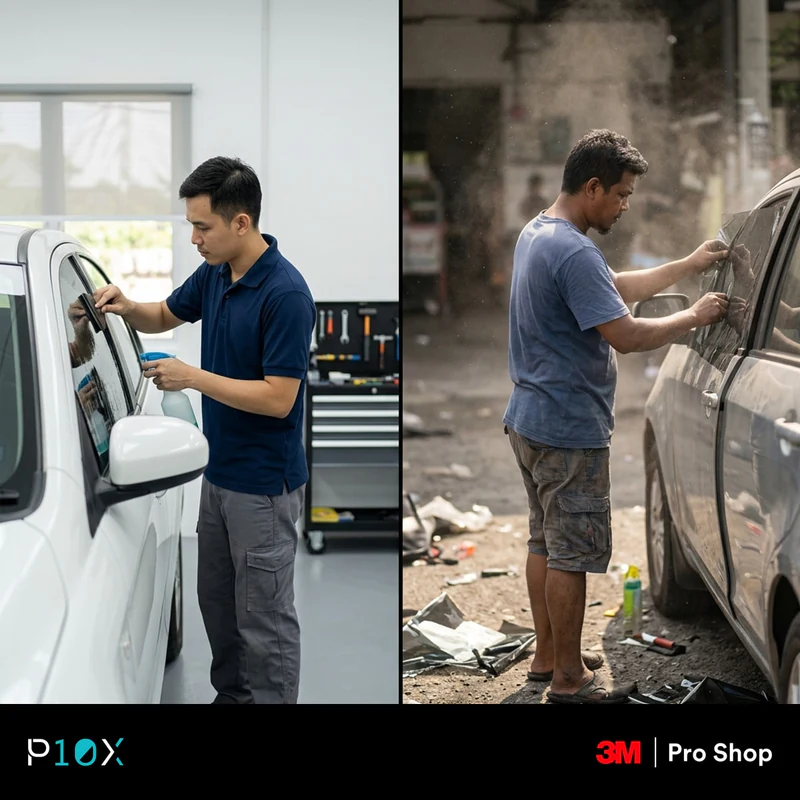
Scratches, seal damage and blurred vision
New scratches, damaged rubber and a blurred view should be recorded separately, because they are not all faults in the film itself. The shop needs to identify whether the mark is on the tint or glass, whether a seal has been damaged, and whether the driving view is safe.
Scratches on film or glass
Film can be scratched by contact with tools, cleaning materials or grit. Fine vertical lines that appear as a window moves can also come from dirt in the rubber strip pressing against it. Our explanation of tint scratched by a window seal describes that mechanism.
Ask the shop to inspect the strip as well as the film before agreeing to replacement. If grit or damaged trim is still rubbing against the glass, fitting fresh film alone may leave the cause in place. A scratch visible at collection and one that develops later should both be investigated, but their timing gives different information.
Damage around the window
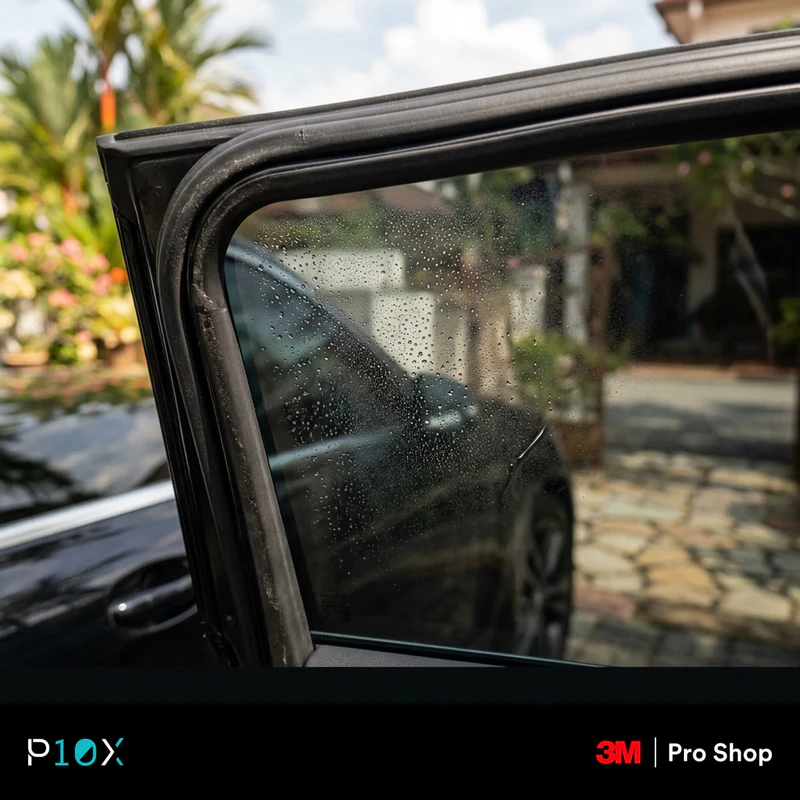
Photograph fresh cuts in rubber, disturbed trim or damage near the window before anyone tries to repair it. Include the surrounding area so the location is clear. Before-and-after photos and the shop's handover record can help establish whether the damage was already present.
A close-up taken after tinting does not, by itself, prove installer fault. You can ask for a joint inspection and a written explanation of what the shop found. Damage to a seal or glass may need a different repair from replacing a piece of tint, so the remedy should name the affected part.
A view that stays blurred
Moisture can temporarily distort the view through fresh tint, but that does not make it safe to drive with poor visibility. Do not drive if you cannot see clearly enough to do so safely. Contact the installer and arrange an inspection without relying on a calendar deadline.
If the view remains wavy or blurred after the stated drying period, ask the shop to check the film and glass. Replacing tint should follow an assessment of the cause, not a promise that every visibility problem will disappear once new film goes on.
How to avoid a poor tint installation
Before booking, discuss the film being supplied, the condition of your windows and how the shop handles concerns after collection. A neat installation depends on preparation and fitting as well as the material. A brand name on a quotation does not replace clear details about the actual work.
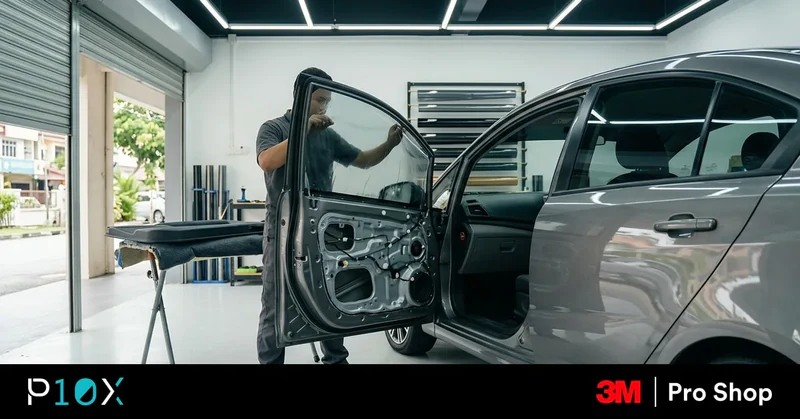
You can ask to see the installation area and how the glass is cleaned. Dust control, clean tools and removing old adhesive matter because material left between the film and glass can affect the finish. Wet glass and exposed film can pick up particles from the work area, so the conditions around the car matter too.
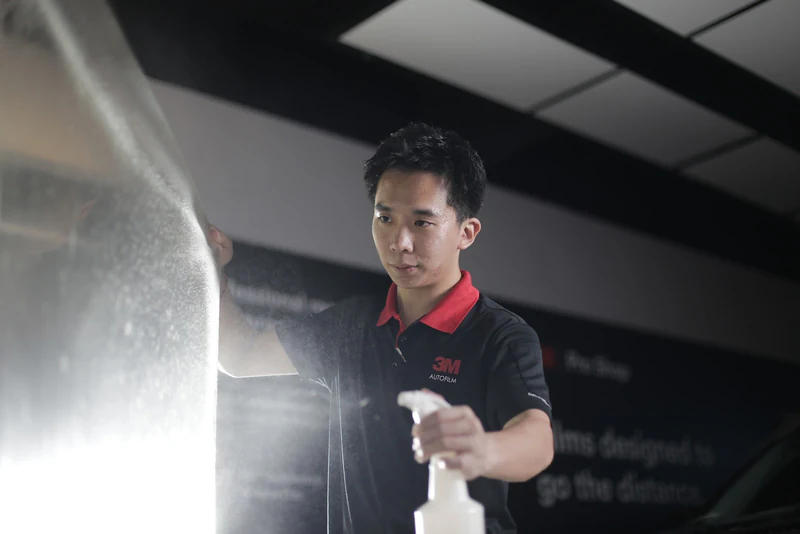
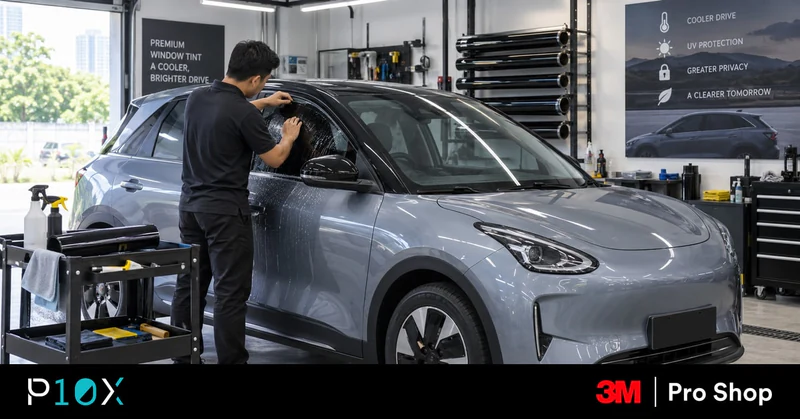
3M technician spraying solution onto window film during preparation.
For a 3M installation, verify that the business is a 3M Authorized Dealer. Ask for an invoice identifying the film series and shades fitted to your car, along with the E-Warranty record. If different windows use different series, that should be clear before the work starts, not discovered when you question the result.
Choosing car window tint for heat rejection and visibility is a separate decision from checking workmanship. A dark appearance cannot tell you whether the glass was prepared properly, and an expensive package does not make an inspection unnecessary. You can ask to view a completed installation in daylight to understand the finish the shop intends to provide.
Before handing over the car, record existing glass scratches, seal damage and loose trim with the shop. Before collecting it, confirm the waiting period for operating and cleaning the windows, the expected drying time and how to arrange a follow-up. These conversations make it easier to distinguish an existing mark, normal drying and a new problem.

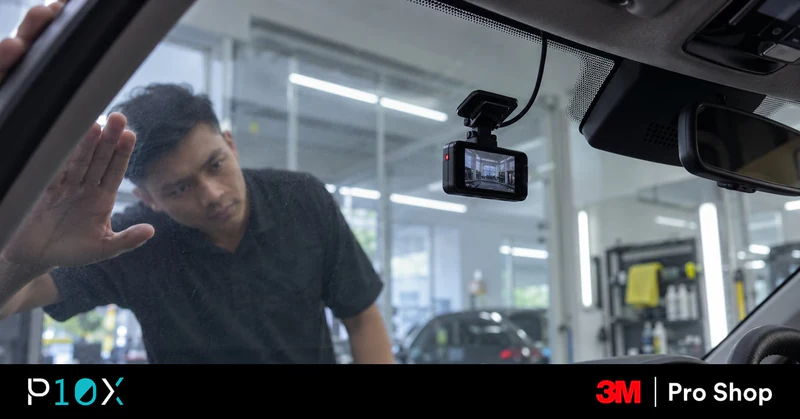
Tinted windscreen inside a workshop with 3M signage reflected in the glass.
Installation rework or a warranty claim?
Poor workmanship and a covered product defect are different concerns. Trapped contamination, a damaged seal or a poor cut needs an installation assessment. Bubbling or cracking may qualify for a 3M product warranty assessment, but a symptom alone does not establish the cause or guarantee that a claim will be accepted.
For eligible 3M film, bubbling and cracking can be covered, subject to the written terms and inspection. This does not mean every bubble seen during drying is a defective product. You can ask whether the shop is proposing a workmanship rework or submitting the film for a manufacturer warranty assessment, and what remedy each route involves.
3M Malaysia's warranty terms apply to the original consumer and are not transferable. They also state that abuse or improper care voids the warranty. Keep your invoice, installation date and E-Warranty record rather than relying on a verbal promise. If a record is missing, ask the installer to help locate or correct it instead of assuming that no remedy is possible.
Aftercare starts with leaving newly fitted 3M tint alone. The automotive care guide says not to open or close the windows, or clean them, for at least 48 hours after installation. Follow a longer period if the installer specifies one for your job. This initial waiting period is not a promise that all residual moisture will be gone after 48 hours.
Once cleaning is allowed, use clean water, a soft cloth and a non-abrasive pH neutral glass cleaner where needed. Dirty water and rough cleaning materials can scratch film. If the shop believes aftercare caused a problem, ask it to identify the damage and explain the connection, rather than accepting a vague statement that you must have used the car wrongly.
What to send the installer
When something looks wrong, send clear photos, the installation date and a short description of the affected window. Ask for an inspection and an agreed next step. Reporting a concern early creates a useful record, but there is no universal rule that every tint complaint must be made within 48 hours.
A useful message includes:
- Which window is affected and where the mark sits.
- When you first noticed it and whether it is changing.
- A wider daylight photo and a close-up of the concern.
- Your invoice, film details and E-Warranty record, if available.
- Any relevant event, such as cleaning the window or attaching an accessory.
You could write: “I collected the car on Monday. There's a raised patch near the centre of the front passenger window, and a corner appears to be lifting. I've attached daylight photos. Please let me know when you can inspect it and whether I should leave the window closed until then.”
Describe what you can see instead of diagnosing failed adhesive yourself. If the shop advises waiting, ask what should improve and when it wants to review the window. Keep that reply with your photos so a later conversation refers to the same concern.
Leave the film in place until the shop has assessed it. If another installer checks it, you can ask for photos and written findings before authorising removal. Stripping the film first makes it harder to inspect the original condition, and rear glass with heater lines needs particular care during window tint removal.
When a bad tint job needs replacing
Replacement makes sense when inspection confirms a fault that cannot be put right in place. A torn piece, badly contaminated film or persistent separation may need a new piece of film. Normal moisture that is clearing does not need the same response, and damaged seals or glass need their own repair.
Before agreeing to a redo, ask what caused the problem, what will be replaced and how the shop will address the cause. For an eligible warranty claim, get the outcome recorded. This is more useful than a promise that a second installation will be perfect without explaining what changes.
A 3M Authorized Dealer such as 3M Pro Shop by P10X can discuss film choice, fitting and documentation before you book. You can find your nearest 3M Pro Shop and ask what finish and aftercare instructions apply to your car.
Find out the best protection for your car
Visit a 3M Pro Shop and discover the cost-effective 3M Protective Film and Window Tint
Frequently Asked Questions
Are bubbles after window tinting normal?
Small moisture pockets can be normal soon after installation. Their appearance should be assessed against the film's drying guidance. Trapped debris, growing bubbles or film lifting from the glass deserves an installer inspection rather than a diagnosis based on colour alone.
How long does tint take to dry?
It varies with the film and conditions. General industry guidance describes a few days to a couple of weeks, while some coatings can take longer. Ask for the expected period for your installation. Report peeling, damage or unsafe visibility without waiting for that period to end.
How much dust under tint is acceptable?
There is no universal acceptable count. Automotive inspection guidance considers whether blemishes are noticeable when looking through the glass in natural daylight. A tiny inclusion and a visible cluster in your driving view should not be treated as the same complaint.
Should I pop a window tint bubble?
No. Puncturing or pressing the film can damage it and make the original concern harder to assess. Photograph the bubble and let the installer advise whether it is drying moisture or needs attention.
Is peeling tint covered by a 3M warranty?
Do not assume peeling automatically qualifies. Ask the installer to assess why the film is lifting and distinguish a workmanship remedy from a product warranty claim. Any claim needs to be checked against the written terms for the installation.
Can I lower my windows after tinting?
For newly fitted 3M tint, do not open or close the windows for at least 48 hours, and follow a longer waiting period if the installer gives one. Do not clean them during that initial period either. Being allowed to lower the window does not mean the film has completely finished drying.